


 My account
 My Reserves
By Laura Taylor
from poolside sips to rosés for red wine lovers
Each year, Jonathan Ray, drinks editor of The Spectator, and I put our heads together to come up with a series of four different Wine Schools for Spectator readers. During Lockdown we met students scattered across the country, Zooming in for a four-part series on the classic grape varieties. Since then, we have held The Spectator Wine School in person and it’s a real treat to meet readers and taste together in the Boardroom of the world’s longest continually published newspaper’s HQ on Westminster’s Old Queen Street.
Following our Classic Varieties series, we have covered The Classics, Alternatives to the Classics, Off the Beaten Track, Tricks of the Trade and the ever popular Battle of the Bubbles. This year, we have taken a ‘masterclass’ theme, starting with Bordeaux in April, Rosé in June and we will continue with Italy and Burgundy later in the year.
This week’s rosé masterclass was huge fun and certainly opened a few eyes as to the versatility of pink wine and the different styles available. I had to sell the concept hard to Jonathan at first – “who will take rosé seriously?” he queried – but it was soon over-subscribed with a waiting list; one enthusiastic attendee proclaiming “I just LOVE rosé!” having signed up the moment he saw the ad.
Flight One
The class of 2024 arrived bright and early and we started off with a glass of pink sparkling wine before we settled down to the masterclass. I like to serve the wines blind – not for any competition, or to embarrass anyone, but because it’s fun to hear what people think about the wines without any preconceptions about pricing and origin. So perhaps you’d like to play along too…
Both wines had a similar rich pink colour, the wine in glass ‘A’ had a nose of delicious creamy strawberries and was broader on both the nose and palate, intense and with a lovely weight. Wine ‘B’ had bright and fresh aromatics which really made our mouths water in anticipation, and on the palate was lively and vivacious, lingering and inviting another sip. Both were delicious and the crowd was split 50:50 as to their preference.
So, what were they?
Glass A: Henri Chauvet Rosé Champagne, Cuvée Aphrodite NV @ £36.95
100% Pinot Noir, with 15% still red wine blended into the whole bunch pressed white juice of the Pinot Noir prior to secondary fermentation (Damien Chauvet feels that this method – only allowed in sparkling wines in Europe – allows him to better control the colour and the aromatics); 10 g/L dosage, 12% ABV. The main base wine for this was from the 2020 vintage, bottled in 2021 and disgorged in September 2022 – the Chauvets helpfully put that information on their labels.
Glass B: Ambriel Huzzah Rosé, West Sussex MV @ £32.95
59% Pinot Noir, 26% Chardonnay, blending in 15% Pinot Meunier. The Outhwaites use the assemblage method for their Huzzah Rosé described above and the direct maceration process for their Ambriel Rosé. This Huzzah wine has10 g/L dosage and 11% ABV. This wine had spent an incredible 68 months on the lees but still retained freshness and verve, showing the differences in climate and soil (Ambriel are on green sand). This extended lees ageing softens the brisk English acidity and rounds out the mouthfeel, making for an incredibly tasty wine.
We declared this round a draw – both wines showed brilliantly.
Flight Two
The theme of flight two was ‘colour’. During last year’s wine school, I showed a slide that had different coloured rosés lined up together and asked the students which wine they thought was the sweetest. What do you think?
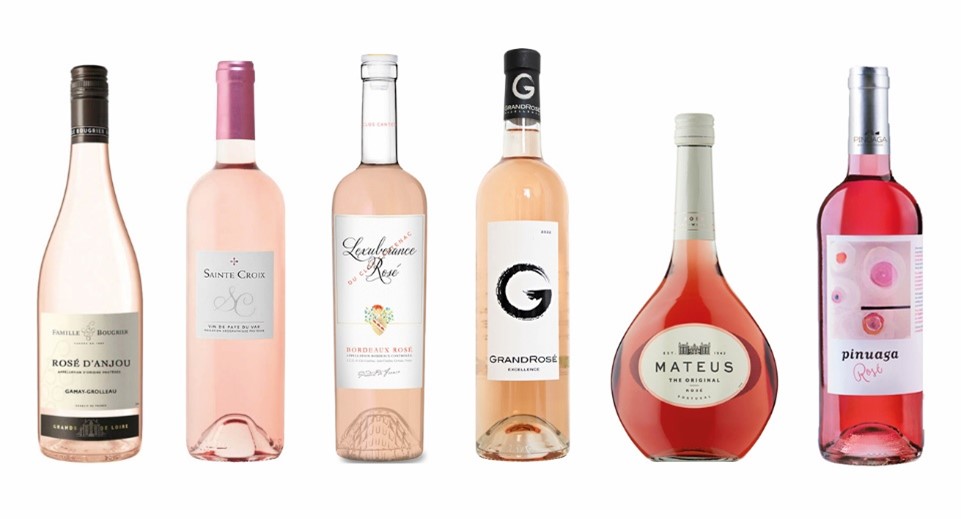
The students graded them from left to right as sweetest to driest … but colour can be deceiving as wines 1 and 4 are bone dry!
Lesson number one for this flight … colour does not indicate sweetness.
For this round, we poured two deeply coloured rosés and asked simply ‘which wine is sweeter’. The wine in glass A was slightly spritzy, had a lightly expressive nose and juicy red fruit on the palate with a hint of sweetness – it was refreshing but had a very short finish. The wine in glass B was much more aromatic with greater complexity on the palate and layers of blue fruit and a long, long finish. The sweetness question was taxing and the students struggled to read the two wines so we spent some time looking at structure and how to taste sweetness on the tips of our tongues, comparing this to fruitiness (and avoiding what our eyes were telling us). All rather complicated! A show of hands slightly tipped the preference to wine A, on the proviso that it would be served very well chilled and they were all very surprised to learn that these were from neighbouring countries Portugal and Spain with Glass A being…
Glass A: Mateus Rosé! 11% ABV; ~15 g/L residual sugar – currently on offer at Waitrose for £5.75, although I had splashed out a little more at our local Sainsbury’s. This blend of Baga, Rufete, Tinta Barroca and Touriga Franca from the Douro Valley still comes in the curved bottle that was inspired by the flasks used by soldiers in WW1 (which we all used as candle holders in days gone by) and it was interesting that the low pH (high acidity) and light spritz masked the sweetness.
 Glass B: Pinuaga Rosé 2023, 13% ABV, @ £14.85. Bone dry and described by Jonathan in The Field as “a vivid, really rather alarming bubble-gum pink that looks as if it must be bubble-gum sweet. But it ain’t: it’s deliciously complex with full-flavoured red berry fruit that finishes perfectly dry. It’s utterly scrumptious.”
This was a fascinating example of serving wines blind as once we all knew the origin, the debate turned to whether one would prefer 2 bottles of Mateus Rosé or one of Pinuaga Rosé at which point it seemed to depend on how cold the wine was served! A great round.
Flight Three
In this flight, I wanted to show that a pale colour doesn’t necessarily mean a dry, Provence style wine and here we talked about winemaking and how arresting fermentation can retain sweetness in direct pressed wines.
In glass A we had an off-dry very pale coloured wine, the sweetness not at all masked, with a grapey, viscous character whilst the wine in glass B was bone dry, easy to drink and with red berry fruit and a vibrant finish. Everyone spotted the sweetness and most recognised the Provence style wine of wine B – bravo students of the SWS!
Glass A: Rosé d’Anjou, Famille Bougrier, Loire 2023 – a blend of Grolleau and Gamay which I bought from The Wine Society for £8.25 /bottle; 11% ABV; 12 g/L residual sugar. Everyone spotted that this was the sweetest wine in the flight as the sweetness was not as hidden as it is in the Mateus Rosé. It came as quite a shock to some that a pale pink rosé could be sweet, so this was interesting and sparked a debate around shelf talkers and how wines are sold (TWS are very open about the fact that this is off-dry on their website).
Glass B: Sainte Croix Rosé, Var 2023 served from magnum; £12.25 /bottle or £29 /magnum; 12.5% ABV; bone dry. It’s a blend of Merlot, Muscat, Grenache, Chardonnay and Caladoc and was hands down the favourite wine in the flight, perhaps through familiarity but we all agreed that it was easy to drink and had a nice complexity to it. Not surprising, as it has just won a silver medal at the Decanter World Wine Awards. The magnum bottle size went down very well too.
 We decided that the Rosé d’Anjou needed some food to go with it – perhaps a nice nicoise salad or a charcuterie board to off-set the sweetness but the Sainte Croix could be enjoyed on its own or with food (I can tell you it’s delicious with Greek style chicken skewers) and this round went to Provence and Sainte Croix.
Flight Four
Finally, we approached Posh Pinks and rosé wines for gourmands and red wine drinkers. The two wines in fight four were rosés that really taste like fine wine.
I put them head to head: two pale pink wines, both £19.75 a bottle, both dry, both 13% ABV, so the differences were only in the grape varieties and the winemaking.
The wine in glass A had creamy red fruit on the nose, it was textured and layered with a lovely breadth and a density to it from lees ageing, ending with a hint of tannin – a true rosé for red wine drinkers. Everyone was sold on it. And then they tasted the wine in glass B… and they couldn’t make up their minds which they preferred – this had texture and body and a familiarity to it that everyone enjoyed and, again, that food friendly structure. Nobody could decide which they preferred until I dropped a hint that they were both from France and Elaine exclaimed “I hope one is from Bordeaux as that’s why I’m here!” – and well spotted!
Glass A: L’Exuberance Rosé du Clos Cantenac 2023 from Bordeaux. 100% Merlot, 13% ABV, bone dry – Tamlyn Currin of JancisRobinson.com hit the nail on the head when she said that Lolly Krajewski’s rosé is ‘serious and food friendly (it was superb with cold côte de boeuf)’ – this is a beautiful wine and a steal at £19.75. A large proportion of the wine is matured in egg-shaped tanks, which keep the fine lees in constant suspension, adding complexity to the blend and this explains the creamy, weightier mouthfeel, which makes this a true gourmand wine.
Glass B: GrandRosé, AOP Côtes de Provence 2023. 35% Grenache, 25% Syrah, 25% Cinsault, 15% Rolle (aka Vermentino); 13% ABV, bone dry. This wine has been organically produced since 2010. The grapes are harvested at night, crushed and the cool must is allowed to take up a light pink colour before being pressed under inert gas to prevent oxygen uptake. After fermentation, time on the lees in stainless steel tanks gives added complexity and this really is an all-year-round rosé.
Round four had split the crowd again and I think that many people would enjoy a mixed case of the two wines. The most interesting observation for me was that everyone expected these wines to be way more expensive than £19.75 a bottle, reinforcing our view that they offer brilliant value for money.
So, what did we learn from this masterclass?
- There are many different grape varieties involved in rosé winemaking (although consumers are not as interested in those as wine geeks are).
- There are different winemaking techniques – arrested fermentation, ageing on the lees, using oak, light carbonation, etc. each adding different nuances and levels of complexity to the finished wine.
- Colour is not an indicator of sweetness.
- Rosés need better labelling to help the consumer decide what to buy.
- Bordeaux rosé is a revelation.
- Provence rosé still rules.
- Sparkling rosé from the UK needs time on the lees and is delicious.
- Rosé Champagne is sophisticated and Champagne Henri Chauvet’s wine should be enjoyed young.
- Rosé pairs well with food and is not just a swimming pool wine.
- Rosé is an all-year round wine, not just for summer.
- Real men drink pink!
- Rosé is a serious wine and can appeal to red wine drinkers
If you have any questions, please don’t hesitate to email me at laura@privatecellar.co.uk but, meanwhile, a huge thank you to The Spectator and Jonathan Ray for hosting the masterclasses and I look forward to exploring Italy and Burgundy with readers later in the year.
“I would like to thank you for the excellent organisation for this lovely event! It was a splendid evening – interesting wines and expert opinion from Laura. … I never drink rosé, and simply booked the event as my Australian friend loves it! I discovered and learned a lot from the presentation of the wines. Please pass our thanks to all involved.” KC