My account
 My Reserves
by Nicola Arcedeckne-Butler MW
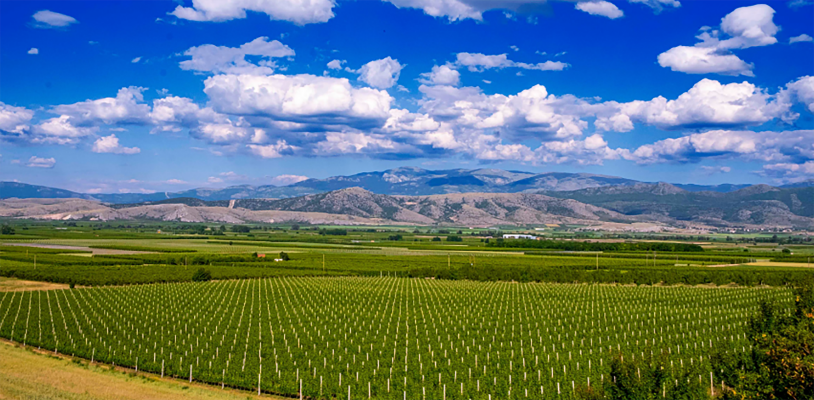
I was lucky enough to make the draw for the oversubscribed Masters of Wine trip to Macedonia in Northern Greece – home to our very own Château Julia and the Costa Lazaridi operation – the aim of which was to find out more about the region and spread the word about the fascinating wines produced there.
21 Masters of Wine (a Drama of MWs?), let loose in Northern Greece – what could possibly go wrong? Luckily, very little as we were hosted by the Winemakers of North Greece and the Greek Wine Federation who laid on the most amazing trip, with visits to multiple growers, fabulous food and stopwatch precision timing to manage our packed days and keep the wandering MWs in line. Excitingly, each winery visit gave us an opportunity to taste the wines from up to six different growers who presented their wines in tasting order so we could taste, for example, all the Assyrtikos together followed by all the Malagousias. A real nerd’s paradise.
Our first visit was to the region of Drama, to Nico Lazaridi, brother of Costa Lazaridi (true to winemaking families, they are on no speaks), where we had in-depth discussions on the pros and cons of native and international grape varieties. The main take-away was that the international market is more interested in native varieties whilst the Greeks are looking for something more exotic, for which read non-Greek, but the wines were universally excellent, regardless of the variety. As an aside, and personal pride apart, I am delighted to report that the top performing Assyrtiko was none other than our very own Château Julia!
After the day in Drama, we went to Naoussa, up towards the border with Northern Macedonia and Albania, for a deep dive into Xinomavro, a red grape first mentioned by name in the 16th Century and which has no known DNA link to any other variety. The name means sour (Xino) and black (mavro), but for us one of the biggest challenges – all week – was to get the pronunciation right – the X is pronounced as a hard X, and the accent falls on the first o – Txinòmavro. It is incredibly versatile making sparkling wines, fresh whites, juicy rosés, low tannin reds and structured, full bodied wines which need and deserve time to evolve. It was quite a revelation just how successful each of the styles was.
No visit to Greece would be complete without a passing mention of Retsina, the overtly pine-infused wine which was about all you could buy a few decades ago. The pine flavouring came about when porous clay jars needed to be sealed so wines could be shipped to the cities, but by the 1970s it was being introduced into some of the poorest quality wines with the inevitable headaches to follow. We spent an entire evening dedicated to Retsina from the top producer, Kechris, and it was a real eyeopener – these are wines which can age really well and the older ones are reminiscent of a dry dessert wine infused with incense. Because it is considered a ‘Tradition’ style, Greek wine laws do not permit the vintage on the label, but my top picks were the 2014 and 2022 Tear of the Pine – and yes, I would willingly drink them again!
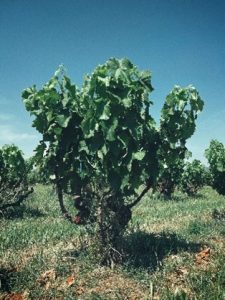
Day three saw us go further up into the hills to Amyndeo where the vineyards start at around 500m above sea level, on a scenic plateau between the mountains – our hotel for the night in Nymfeo was at 1400msl, where we were warned bears roam freely! Snow in winter is standard, and the temperature was a good 5-10C below that of Thessaloniki where we had landed on Sunday, and with abundant water from snow melt they rarely need to irrigate. Here at Alpha Estates we came across hundred year old Xinomavro bush vines whose roots go down several metres into chalk and which are not irrigated – the wines from this plot are fabulously concentrated, as you would expect. With the slightly cooler climate, white grapes do exceptionally well in Amydeo, both indigenous ones like Malagousia and Assyrtiko but also Sauvignon Blanc and Chardonnay – something for everyone.
Our final day took us around the coast from Thessaloniki to Epanomi, via the tomb of Philip II of Macedonia, father of Alexander the Great – you can’t go to Greece without seeing a few antiquities – and then on to the home of Malagousia, a deliciously aromatic white. This was down to its last few vines in an experimental vineyard at Château Carras when winemaker Evangelos Gerovassiliou thought it might do well in his home region of Epanomi; production is now booming and Malagousia is now found right across Greece. Floral, with more than a nod towards Muscat (but with entirely separate DNA), the wines are delicious and worth seeking out.
Our last group discussion was probably the most interesting of the week, revolving around our overall impressions of the wines of Macedonia and, much more importantly, their place in the context of the wine drinking world. Like much of the wine producing world, many growers are struggling with the economic realities of vine growing, and many expect even some of the larger wineries to falter in the next few years, the result of lowering consumption and rising production. Whilst we can offer no panacea, we were all convinced that those making high quality wines, selling at the correct prices, would remain firmly established; as elsewhere, growers who cut corners or make wines which over-made and over-marketed, to the detriment of the actual quality, will find it hard to keep their followers.
And overall? We were bowled over by the wines, way more so than we expected, and particularly by the huge variety on offer. So many fresh, racy, and frankly different whites to lift jaded palates, and such a wide range of reds, covering everything from light, chillable ones right up to seriously focused wines which demand patient cellaring. Now, I wonder how many more I can sneak onto Private Cellar’s list …